
Blue Heron Farm: 50 Years of Maple Sugaring, A Timeless Legacy of Preserving Land
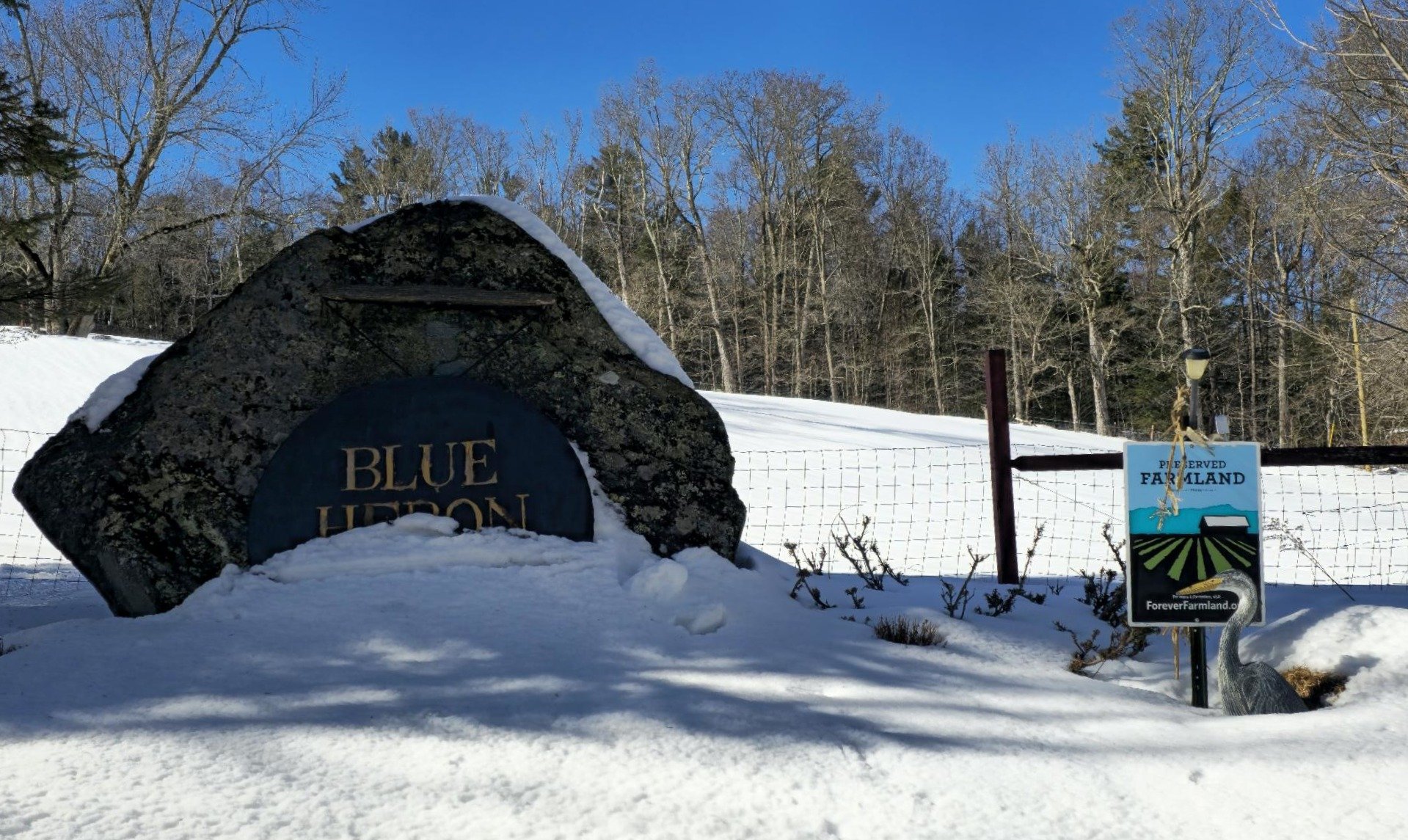
Bill and Norma Coli are celebrating the 50th anniversary of Blue Heron Farm in Charlemont. We wanted to share the story of our longtime friends, whose entire approach to farming is rooted in a commitment to land conservation.
The Colis first purchased their property in 1975. They saw a short, two-line advertisement in the Greenfield Town Crier for a farm “at the top of the hill and the end of the road.” They thought it sounded perfect – and fifty years later, they still feel the same way.
“It’s not that we don’t like to travel. We like going places. We just don’t like staying places. This is our place,” says Norma.
Norma grew up in New York City and Bill in Providence, Rhode Island. The two met in 1969 at a live music show at the Red Dog Saloon in Greenfield. Not long after, they began working on small farms in Vermont together.
They laugh about how they worked for almost no money back then and how proud they were of it. “No one would do that these days,” they said. “And still, back then, the old-time farmers in Vermont got a kick out of us young hippies.”
They were also witnessing a major shift in the landscape around them. Across southern Vermont, farmland that had been held by families for generations was being broken up into smaller house lots and sold off to developers.
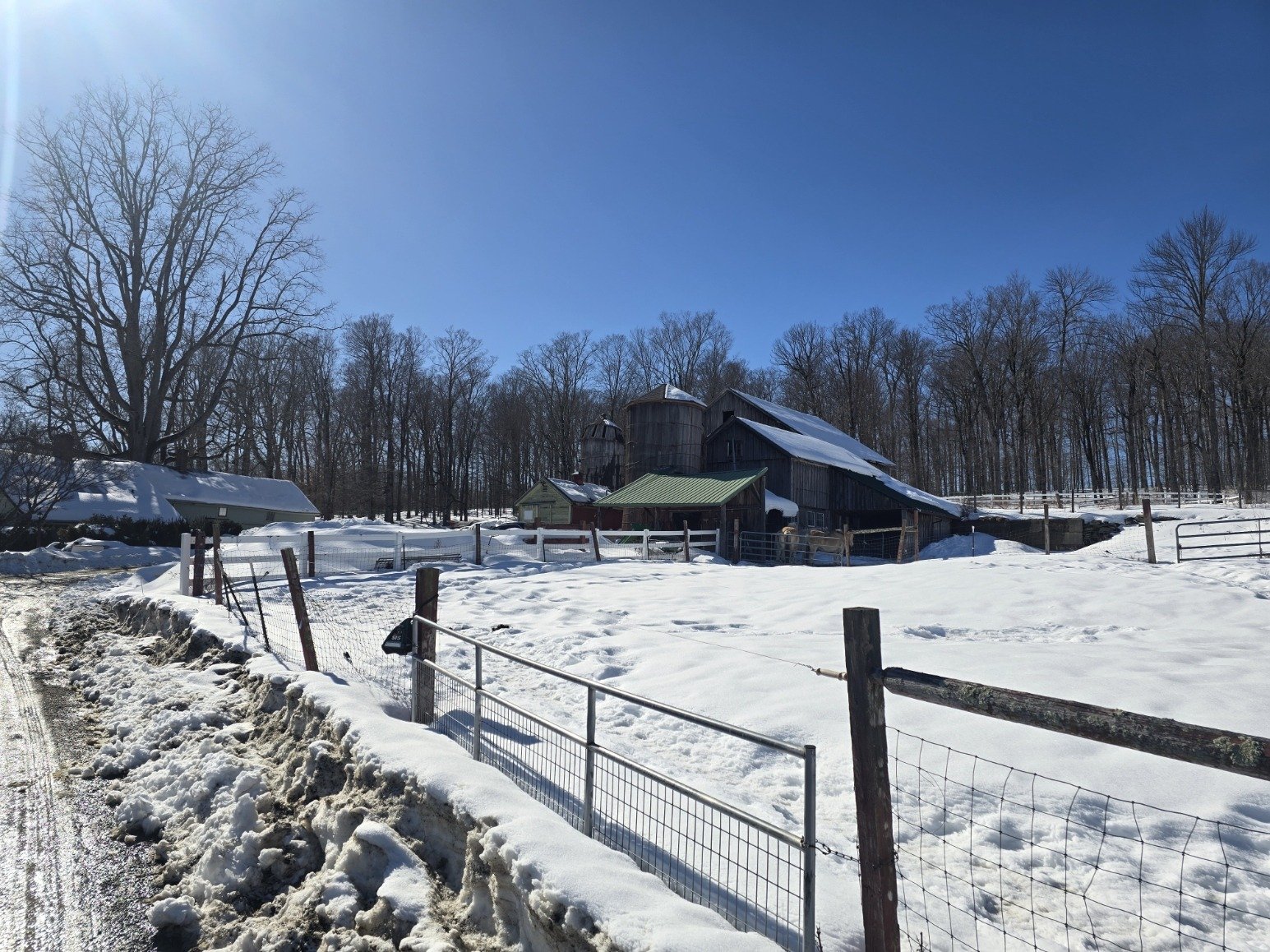
The Coli's barn at the top of Warner Hill.
Those experiences shaped how they thought about land ownership and conservation. When the opportunity to purchase their own farm appeared in that brief newspaper listing, they jumped at it. They were able to finance the purchase thanks to a local banker who met with them one-on-one and decided to have faith in two young farmers starting out.
That kind of opportunity, they noted, is far harder to find today.
“I imagine that’s incredibly discouraging to new, young farmers these days,” they said. “How are they supposed to get started?”
While raising livestock, breeding Norwegian Fjord horses, and haying their property, Blue Heron Farm also grew into a thriving maple sugaring operation. Bill and Norma built their sugarhouse in 1986, perched the at the top of the hill, at the end of the road, on the land they fell in love with. Today, the entire maple syrup production - tapping, boiling, and bottling - still happens right there.

The sugarhouse, built by the Coli's.
Early adoption of new technology helped them expand their business. Blue Heron Farm was the first maple syrup producer in Massachusetts to sell syrup with a private label and a scanning UPC code (barcode), at the time when grocery stores were transitioning from punch-in cash registers.
Today, their syrup is sold in 56 supermarkets across the state. Along with the production of syrup, the Colis also run their distribution system. The furthest store is in Uxbridge, a two-hour drive from their sugarhouse in Charlemont. They noted that initiatives like Big Y’s Buy Local program have been a tremendous help over the years, and they appreciate the sincere intentions of the family-run business.
Running Blue Heron Farm has always been a partnership. Bill was quick to earnestly emphasize how Norma carried much of the day-to-day responsibility for farm operations while he was pursuing his graduate education.
“If she and I hadn’t connected, there’s just no way to do it on your own. We’re true partners. Neither of us are the leader. We make all our decisions together.”
Bill earned a Master’s degree and a PhD from UMass Amherst. He helped start the Integrated Pest Management Program, which researches science-based approaches that promote crop health while lowering costs and reducing the impacts of pesticides on human and environmental health. He also helped develop the original Agricultural Preservation Restriction (APR) framework and wrote the original NOFA guidelines for certified organic farms.
Norma first became involved with the Franklin Land Trust after meeting FLT’s first executive director, Mark Zenick, and Harry Dodson, who led the formation of the land trust, at an event focused on agriculture and conservation.

The Coli's are committed to using sustainable practices on their farm, like solar energy.
“At that time, there were no women on the Board, and basically no women farmers either. So they asked if I would be interested in joining.” Norma went on to serve on the Franklin Land Trust Board of Directors for many years.
For the Colis, conservation was always connected to their firsthand experience watching farmland disappear elsewhere. “We came from southern Vermont and we knew what happened there. We saw the writing on the wall,” they explained. As land around them was sold off to ski resorts and other outdoor recreation companies, they began thinking about permanently protecting their own farm.
“If you go to the top of the hill up by the barn, and you look at the stunning views all around you, you’ll see why we said ‘oh my word, this is beautiful and we can’t see it divided’.”
About 80 acres of Bill and Norma’s land are protected through an Agricultural Preservation Restriction, and the Franklin Land Trust holds a conservation restriction on roughly 30 additional acres.
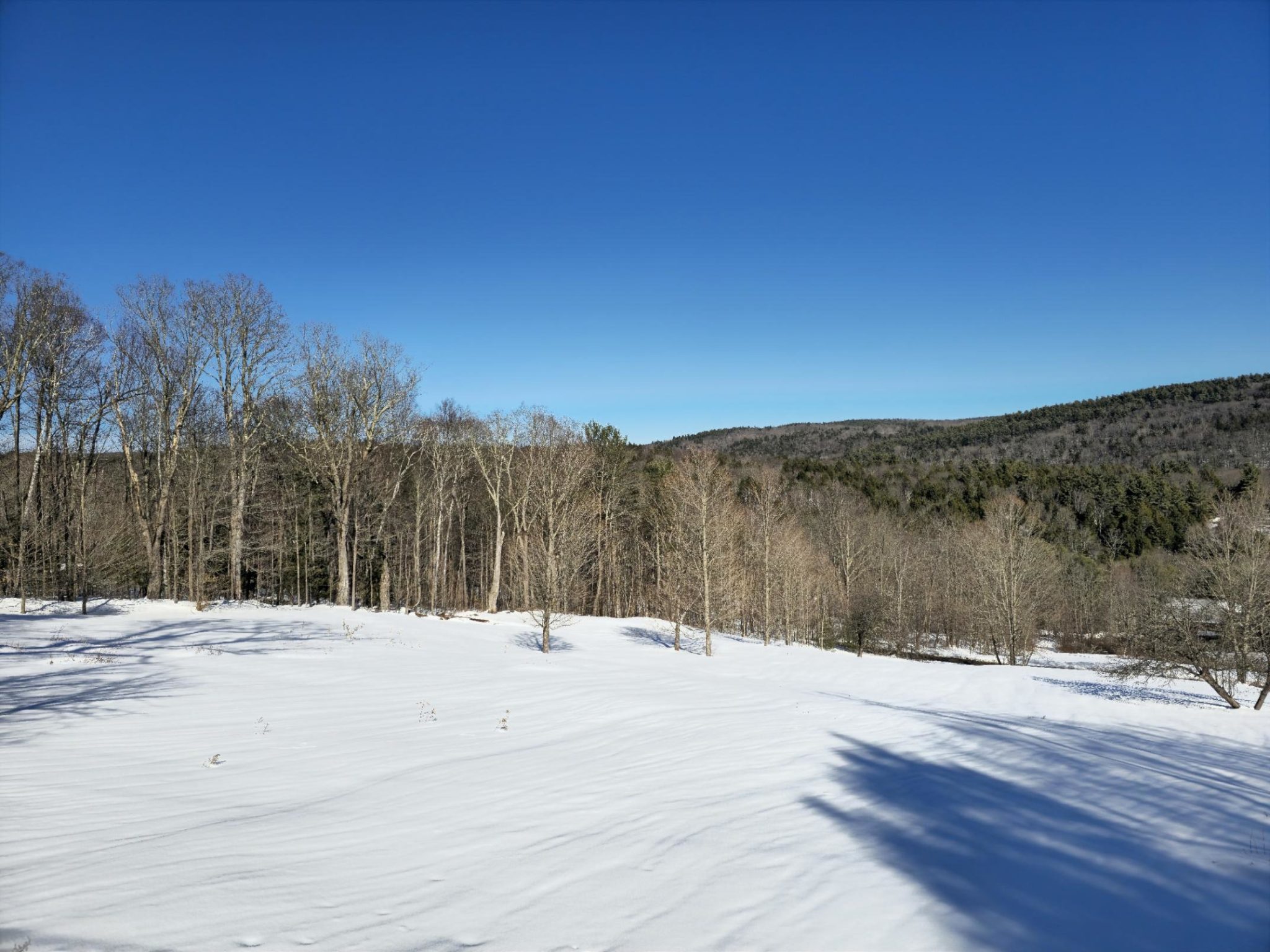
The view heading down the hill.
Before the Colis purchased the property, several parcels had already been carved out for single-family homes. Over time, Bill and Norma bought those lots back, eventually restoring the farm to its original 1797 acreage.
For many years, the Colis used the houses to host farm vacations, bringing families to participate in farm activities throughout the seasons. Today, the homes mostly host writers, artists, composers, and other creatives seeking a quiet retreat. The property was recently featured in Yankee Magazine in an article recommending farm-focused bed-and-breakfast destinations across New England.
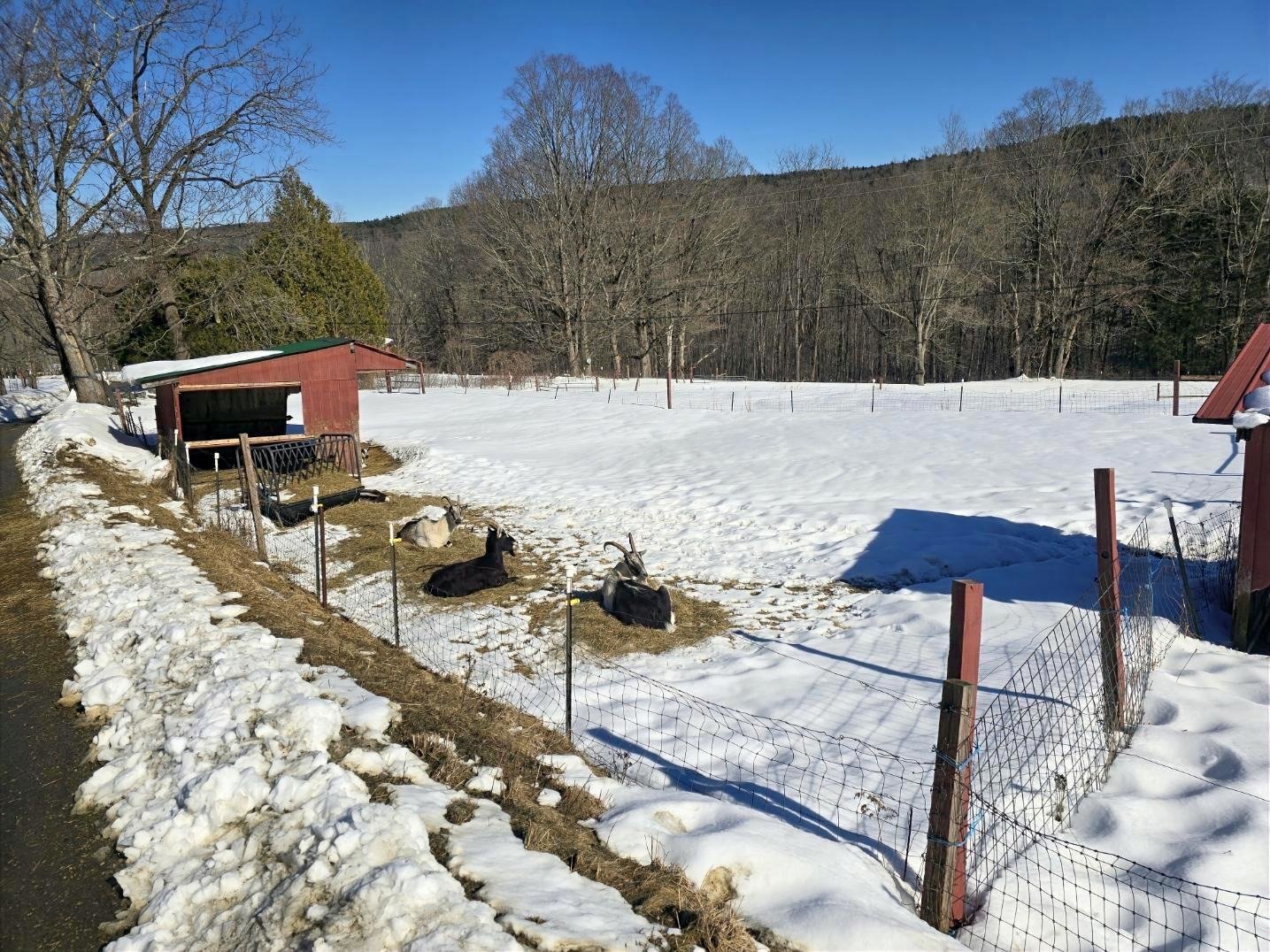
Spending time with the goats was always a family favorite on farm vacations.
As they look to the future, Bill and Norma remain focused on the next generation of farmers. With the average age of farmers continuing to rise, they hope to see more young people discover a path into sustainable agriculture.
By placing an Agricultural Preservation Restriction on their land, they have ensured that Blue Heron Farm will remain in productive agricultural use in perpetuity.
Bill and Norma have fifty years of maple sugaring behind them - and because of their commitment to conservation, the land has the whole future ahead of it.